
Introduction
Environmental, Social and Governance (ESG) regulations are no longer a future concern—they are actively reshaping how UK businesses operate in 2026. From property compliance to corporate reporting, ESG is now embedded into decision-making across industries.
For organisations of all sizes, the shift is clear: sustainability, transparency, and accountability are no longer optional in practice. Businesses that fail to adapt risk financial penalties, reduced investor confidence, and declining competitiveness.
This guide explores how ESG regulations are impacting UK businesses today, what changes to expect, and how to stay ahead.
What Is ESG and Why Does It Matter in 2026?
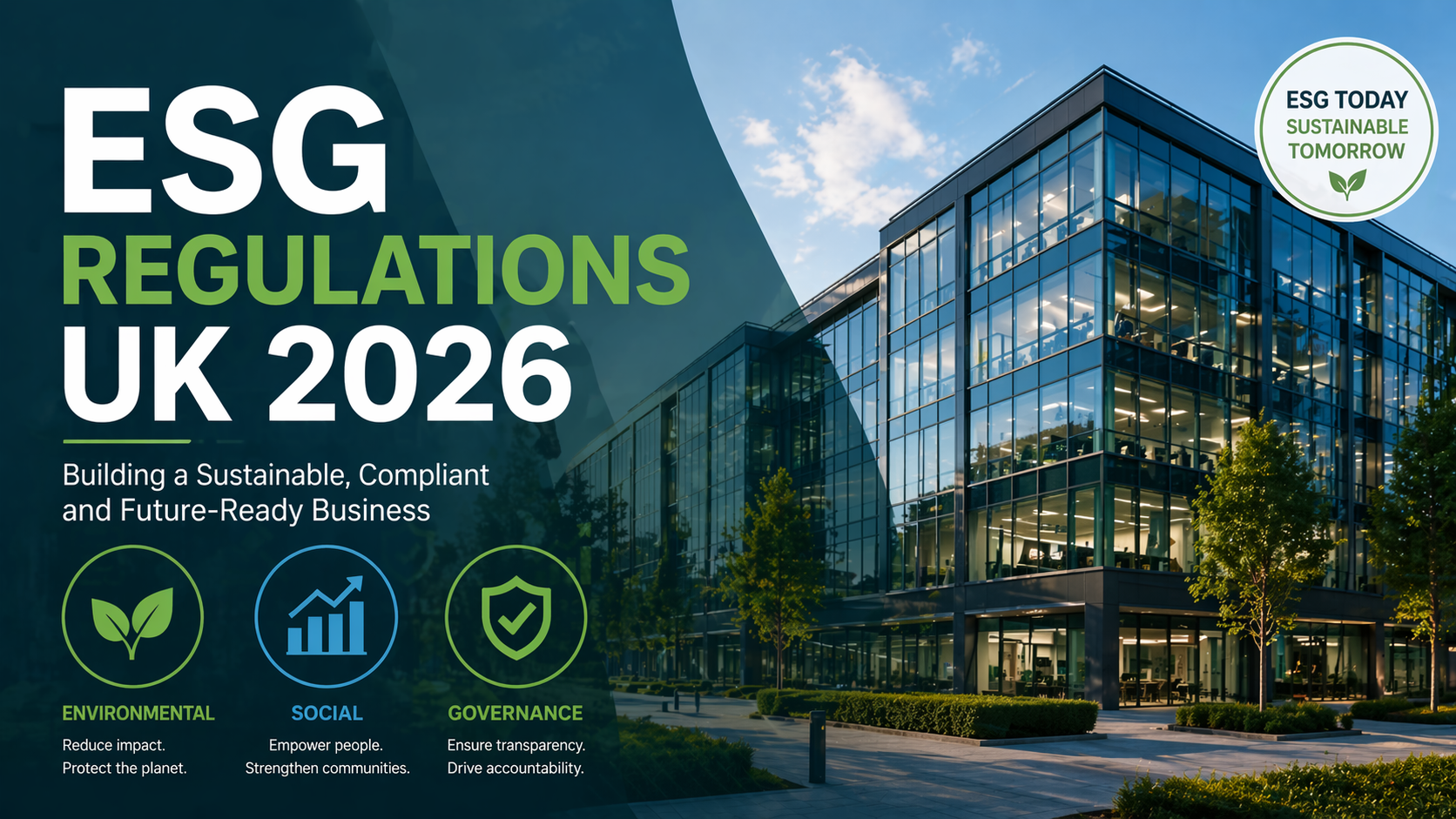
ESG refers to three key pillars:
- Environmental: Energy efficiency, carbon emissions, waste management
- Social: Employee wellbeing, diversity, community impact
- Governance: Ethical practices, compliance, transparency
In the UK, ESG has evolved from a largely voluntary framework into a regulatory and commercial necessity.
Why ESG Matters Now More Than Ever
- Investors prioritise sustainable businesses
- Customers expect environmental responsibility
- Government regulations are tightening
- Energy costs are driving efficiency demands
In short, ESG is no longer a “nice to have”—it is a core business requirement driven by regulation, market forces, and stakeholder expectations.
Key ESG Regulations Affecting UK Businesses in 2026
Several frameworks are driving ESG adoption across the UK:
1. Streamlined Energy and Carbon Reporting (SECR)
SECR requires large UK companies to disclose:
- Energy usage
- Carbon emissions
- Energy efficiency actions
This has increased transparency and pushed businesses to actively manage their environmental impact.
2. Minimum Energy Efficiency Standards (MEES)
MEES regulations directly affect commercial property owners:
- Minimum EPC rating of E required to lease properties
- Government proposals indicate a potential increase to B by 2030, although timelines remain subject to policy updates
This has made energy performance a critical compliance factor. An accurate EPC report is now essential for property transactions and ongoing compliance.
3. Climate Disclosure and Reporting Standards
The UK has historically aligned with the recommendations of the Task Force on Climate-related Financial Disclosures. However, reporting requirements are now evolving.
The UK is moving toward global baseline standards developed by the International Sustainability Standards Board, including IFRS S1 and S2.
Large organisations are therefore expected to disclose:
- Climate-related risks and opportunities
- Financial impacts of environmental factors
- Governance and long-term sustainability strategies
This shift is increasing pressure on leadership teams to integrate ESG into core business strategy.
4. Net Zero Strategy
The UK government’s commitment to net zero by 2050 is influencing:
- Building standards
- Energy usage expectations
- Investment decisions
Businesses are expected to actively contribute to carbon reduction targets, particularly in energy-intensive sectors.
How ESG Is Changing UK Businesses in 2026
1. Property Compliance Is Now Business-Critical
Commercial property is one of the most affected areas.
Businesses must ensure:
- Buildings meet minimum energy standards
- Energy performance is documented and improved
- Compliance is maintained across portfolios
This has increased demand for professional assessments and certifications.
2. Rising Operational Costs and Efficiency Pressure
Energy costs remain a major concern in 2026.
As a result, businesses are:
- Investing in energy-efficient systems
- Upgrading infrastructure
- Monitoring energy usage more closely
Improving efficiency is no longer just about sustainability—it’s about cost control.
3. ESG Is Influencing Investment Decisions
Investors are increasingly favouring businesses that demonstrate:
- Strong ESG performance
- Transparent reporting
- Clear sustainability strategies
Companies with poor ESG credentials may struggle to secure funding or partnerships.
4. Increased Regulatory Scrutiny
Compliance is being more actively enforced.
Businesses must:
- Maintain accurate records
- Meet reporting requirements
- Avoid misleading environmental claims
Failure to comply can lead to fines and reputational damage.
5. Tenant and Customer Expectations Are Rising
Sustainability is now a deciding factor for many stakeholders:
- Tenants prefer energy-efficient buildings
- Customers favour environmentally responsible brands
- Employees value ethical workplaces
This makes ESG a key driver of competitive advantage.
The Role of Energy Performance in ESG Compliance
Energy efficiency is at the heart of ESG regulations.
For commercial properties, this often comes down to certification and performance measurement. While standard EPC assessments provide a baseline, more advanced evaluations—such as detailed SBEM modelling or higher-level commercial energy assessments—offer deeper insight into building performance and improvement opportunities.
Understanding the differences between assessment types is crucial for both compliance and optimisation.
Is ESG Mandatory for All UK Businesses?
While not all ESG regulations apply directly to every organisation, particularly smaller businesses, ESG is becoming effectively unavoidable.
This is because:
- Large companies must report and require data from suppliers
- Investors and lenders assess ESG performance
- Clients increasingly include ESG criteria in procurement
As a result, even businesses not directly regulated are indirectly required to align with ESG expectations.
Risks of Ignoring ESG Regulations
Businesses that fail to adapt face significant risks:
Financial Penalties
Non-compliance with regulations such as MEES can result in fines.
Asset Devaluation
Properties with poor energy ratings may lose value or become unlettable.
Reputational Damage
Negative ESG performance can impact brand perception.
Loss of Business Opportunities
Many contracts now require ESG compliance as a baseline.
Opportunities Created by ESG
While ESG introduces challenges, it also creates opportunities:
- Cost Savings
Energy-efficient operations reduce long-term expenses. - Increased Property Value
Higher-performing buildings attract better tenants and buyers. - Competitive Advantage
Strong ESG credentials differentiate your business. - Future-Proofing
Early adoption reduces the risk of future compliance issues.
How UK Businesses Can Stay Compliant in 2026
- Conduct Regular Assessments
Ensure your buildings and operations meet current standards. - Improve Energy Efficiency
Focus on upgrades such as:
- LED lighting
- Efficient HVAC systems
- Smart energy controls
- Stay Updated on Regulations
ESG requirements are evolving—keeping informed is essential. - Work with Experts
Partnering with specialists such as CCA Environmental Ltd can simplify compliance and ensure accuracy. - Integrate ESG into Strategy
Make sustainability part of long-term business planning, not just a compliance task.
The Future of ESG in the UK
Looking ahead, ESG regulations are expected to become more comprehensive and standardised:
- Greater alignment with global reporting standards (ISSB)
- Expanded disclosure requirements
- Stronger enforcement of existing regulations
- Continued focus on energy performance in real estate
Businesses that act early will be better positioned to adapt and thrive.
Conclusion
In 2026, ESG regulations are fundamentally reshaping how UK businesses operate.
From property compliance to corporate reporting, expectations are rising. Organisations must prioritise sustainability, transparency, and efficiency—not just to comply, but to remain competitive.
While the regulatory landscape continues to evolve, it also presents a clear opportunity: reduce costs, improve performance, and strengthen long-term value.
By taking a proactive approach and working with experienced partners, businesses can stay compliant while unlocking meaningful commercial advantages.
FAQs
- What does ESG mean for UK businesses?
ESG stands for Environmental, Social, and Governance. It refers to the standards businesses are expected to meet regarding sustainability, ethical practices, and transparency. - Are ESG regulations mandatory in the UK?
Some frameworks, such as SECR and MEES, are legally required for certain organisations. Others apply indirectly through investor, client, and supply chain expectations. - How do ESG regulations affect commercial properties?
They require properties to meet minimum energy efficiency standards, maintain valid certifications, and improve performance over time. - What is the minimum EPC rating in 2026?
Commercial properties must have a minimum EPC rating of E to be legally let, with potential future increases under government proposals. - How can businesses improve ESG compliance?
By improving energy efficiency, maintaining accurate reporting, staying informed on regulatory changes, and integrating ESG into long-term strategy.