
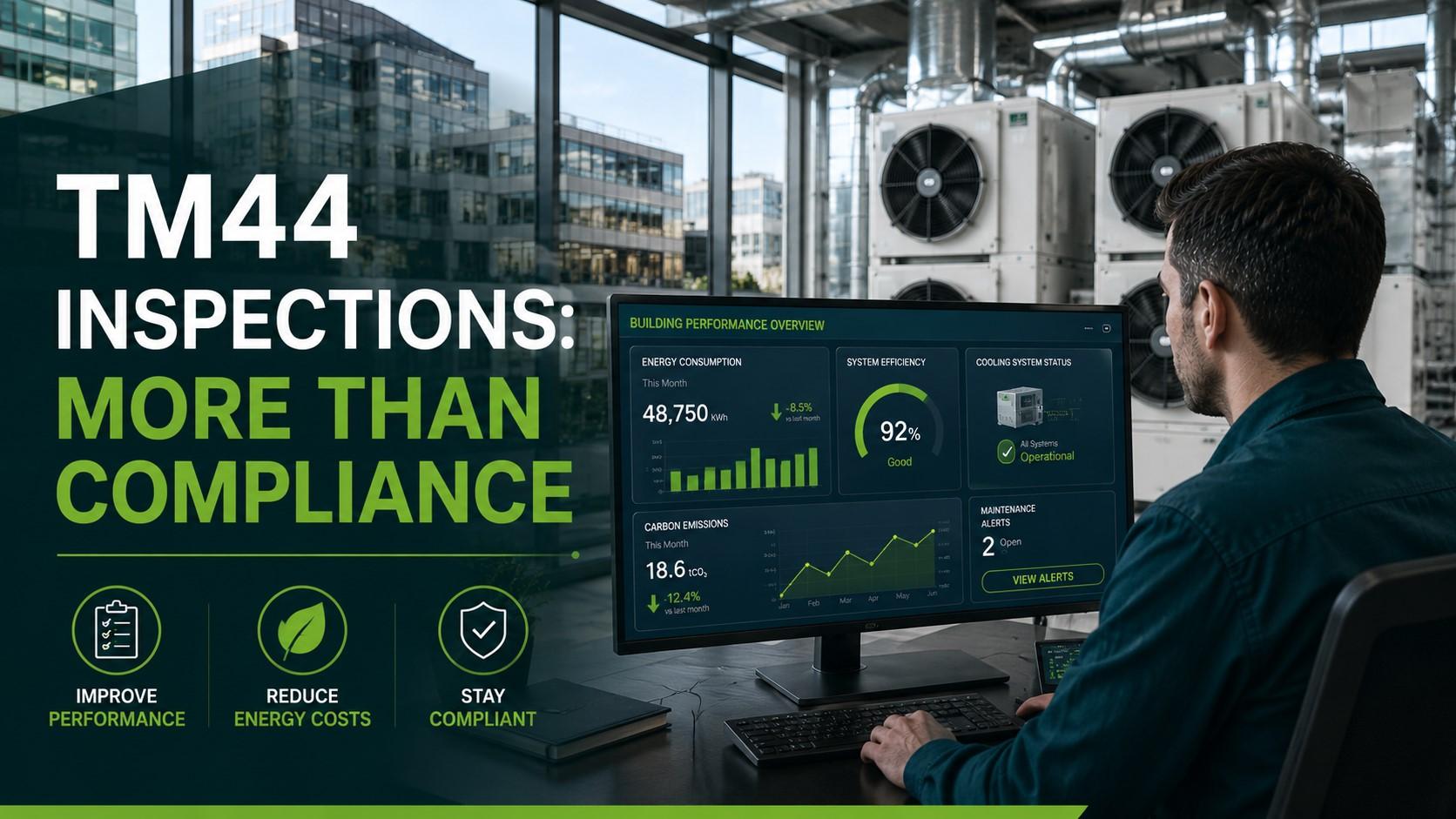
Commercial buildings are under increasing pressure to improve energy efficiency, manage operational costs and maintain compliance with evolving building regulations. For many property owners and facilities managers, TM44 inspections form an important part of that wider building performance strategy.
Although TM44 inspections are often viewed purely as a compliance requirement, they can also provide valuable insight into how efficiently air conditioning systems are operating within a commercial property.
From offices and retail units to healthcare facilities and multi-site portfolios, understanding the role of TM44 inspections can help organisations make more informed decisions about energy performance, operational efficiency and long-term asset management.
What Is a TM44 Inspection?
A TM44 inspection is an energy assessment of air conditioning systems within non-domestic buildings. The inspection is designed to evaluate the efficiency and effectiveness of installed systems and identify opportunities for improving energy performance.
The methodology is based on guidance developed by CIBSE (Chartered Institution of Building Services Engineers) and forms part of the wider framework surrounding energy efficiency in commercial buildings across the UK. Property owners should note that the regulatory framework surrounding TM44 has evolved over time, and it is always advisable to confirm current requirements with a qualified assessor rather than relying solely on historical guidance.
In many cases, buildings with air conditioning systems above 12kW combined cooling capacity may require regular TM44 inspections. These inspections are typically required every five years, although individual compliance obligations can vary depending on system configuration, property use and applicable local regulations. A qualified TM44 assessor can help determine whether a specific building falls within current inspection requirements.
Note: The 12kW threshold and five-year inspection cycle represent general regulatory guidance. Property owners and facilities managers should always confirm their specific obligations with a qualified assessor, as requirements can vary based on system configuration and building use.
Which Commercial Buildings May Require TM44 Inspections?
TM44 inspections commonly apply to a wide range of non-domestic property types, including:
- Office buildings
- Retail spaces
- Restaurants and hospitality venues
- Healthcare facilities
- Warehouses and industrial units
- Educational buildings
- Mixed-use commercial properties
Importantly, the requirement is typically based on the total combined output of the air conditioning systems across a building rather than the output of a single unit alone. Even smaller commercial properties may therefore fall within inspection requirements if multiple systems are installed throughout the building.
For landlords, facilities managers and property operators managing multiple sites, understanding whether installed systems exceed the applicable threshold is an important part of ongoing compliance management. Where there is any uncertainty about whether a building meets the criteria, seeking a professional assessment is the recommended course of action.
Why TM44 Inspections Matter Beyond Compliance
Many organisations initially approach TM44 inspections as a regulatory responsibility. However, the inspection process can also provide practical operational benefits that support wider building performance objectives.
Air conditioning systems are often among the largest contributors to energy consumption within commercial properties. Poorly configured controls, inefficient operation or outdated equipment can result in unnecessary energy use and increased operational costs over time.
A TM44 inspection may help identify issues such as:
- Systems operating outside occupancy hours
- Inefficient temperature settings
- Poor zoning or control strategies
- Oversized or undersized equipment
- Inadequate maintenance practices
- Excessive or avoidable energy consumption
- Opportunities for system optimisation
For commercial buildings seeking to improve operational efficiency, these findings can support better long-term energy management decisions and more targeted investment in building systems.
The Link Between TM44 and Energy Costs
Rising energy prices continue to place sustained pressure on commercial property owners and operators. In many buildings, air conditioning systems operate continuously throughout working hours and can significantly affect overall electricity consumption.
Where systems are not operating efficiently, energy costs may increase unnecessarily over time. This can be particularly relevant for multi-site portfolios, where inefficiencies across several buildings can accumulate into a material operational cost.
TM44 inspections can help identify areas where performance improvements may be possible, allowing facilities teams and building managers to review operational settings, maintenance strategies and equipment suitability. This may support more informed decisions around system upgrades, controls configuration and longer-term capital planning.
It is important to note that a TM44 inspection itself does not guarantee energy savings. However, the findings and recommendations generated through the inspection process may highlight opportunities that support more efficient system operation and reduced energy waste over time.
Supporting Commercial Building Performance
Modern commercial buildings are increasingly evaluated not only on regulatory compliance but also on operational performance, occupier comfort and sustainability outcomes. An inefficient air conditioning system can contribute to:
- Higher operational costs
- Poor thermal comfort for building occupants
- Increased maintenance demands
- Reduced system lifespan
- Greater environmental impact and carbon output
TM44 inspections can provide useful insight into how HVAC systems are functioning within the wider building environment, including how effectively controls, zoning and scheduling are configured. This information may support:
- Planned maintenance strategies and lifecycle planning
- Energy management initiatives and reporting
- Refurbishment and retrofit planning
- ESG and sustainability objectives
- Long-term asset management decisions
- Building Management System (BMS) review and optimisation
For organisations managing commercial property portfolios, proactive assessment of HVAC performance can also help improve consistency across multiple sites and support portfolio-wide energy management strategies.
Common Issues Identified During TM44 Inspections
Although every building is different, several recurring issues are commonly identified during TM44 inspections. Understanding these can help facilities managers and asset managers prioritise review areas before and after an inspection takes place.
Poor Control Settings
Systems may continue operating when areas are unoccupied or outside standard business hours, leading to unnecessary energy use. Poorly configured scheduling, ineffective occupancy sensing or a lack of BMS integration can all contribute to this issue.
Oversized Systems
Some air conditioning systems are larger than required for the building’s operational needs, which can reduce efficiency and increase running costs. Oversizing can also result in short-cycling, which places additional stress on components and may reduce system lifespan.
Inadequate Maintenance
Dirty filters, blocked airflow and inconsistent servicing can negatively affect system performance and energy efficiency. Regular, structured maintenance is an important part of keeping HVAC systems operating within expected performance parameters.
Ageing Equipment
Older systems may struggle to meet modern efficiency expectations and can require significantly more energy to deliver the same level of cooling performance. In some cases, replacement or partial upgrade may represent better long-term value than continued maintenance of end-of-life equipment.
Simultaneous Heating and Cooling
In some buildings, heating and cooling systems unintentionally operate together, creating avoidable energy waste. This is a particularly common issue in buildings where HVAC controls lack clear zoning strategies or where BMS integration is limited.
Absence of Sub-Metering or Energy Monitoring
Buildings without effective energy monitoring may find it difficult to identify which systems are contributing most to consumption. Where sub-metering is absent, inspection findings can help inform decisions about where monitoring investment may be most valuable.
Identifying these types of issues early may help organisations improve operational performance and avoid larger problems developing over time.
Also Read: Commercial EPC vs Level 5 EPC: What’s the Difference?
TM44 Inspections and Compliance Management
For commercial landlords and facilities managers, TM44 inspections form part of broader building compliance responsibilities. Maintaining accurate inspection records and understanding the condition of installed systems can support:
- Compliance documentation and record keeping
- Property management and due diligence processes
- Building operational reviews
- Tenant and occupier expectations
- Sustainability and ESG reporting requirements
As commercial property standards continue to evolve, building performance and operational efficiency are becoming increasingly important considerations across the built environment sector. Organisations that take a structured approach to compliance management are generally better positioned to adapt as regulatory expectations develop.
It is also worth noting that TM44 compliance sits alongside other building energy obligations, including Energy Performance Certificates (EPCs) and, where applicable, Display Energy Certificates (DECs) for certain public buildings. Understanding how these frameworks interact can help facilities managers take a more joined-up approach to compliance planning.
Good Practice: Maintaining up-to-date TM44 inspection records alongside EPC documentation and maintenance logs supports a more comprehensive approach to building compliance management and can simplify future due diligence processes.
Why a Proactive Approach to TM44 Can Be Valuable
Waiting until compliance deadlines approach can limit opportunities for strategic planning and operational improvements. A proactive approach to TM44 inspections may help organisations:
- Better understand current HVAC system performance across their portfolio
- Plan future equipment upgrades and capital expenditure more effectively
- Reduce avoidable operational inefficiencies before they escalate
- Improve maintenance planning and extend system lifespan
- Support wider sustainability and ESG objectives with accurate performance data
- Prioritise sites that may benefit from additional review or optimisation work
For larger commercial portfolios, early assessment can also help identify sites where HVAC performance is materially below expectations, allowing for targeted intervention rather than reactive repair.
Professional TM44 Support for Commercial Buildings
Every commercial building operates differently, and inspection requirements can vary depending on system configuration, occupancy patterns and operational use. Seeking professional guidance is the most reliable way to confirm whether TM44 inspections apply and to ensure that any assessment is carried out to the appropriate standard.
Working with experienced building performance consultants can help organisations better understand:
- Whether TM44 inspections may apply to their buildings or portfolio
- How existing systems are currently performing against expected benchmarks
- Opportunities for operational improvement and energy management
- Wider compliance and energy performance considerations, including EPC and DEC obligations
- How TM44 findings can support longer-term asset management and sustainability planning
At CCA Environmental, TM44 inspections form part of a broader approach to commercial building performance, energy efficiency and compliance support across the built environment sector. Our team works with property owners, facilities managers and asset managers to help them better understand HVAC performance and make more informed decisions about their buildings.
Final Thoughts
TM44 inspections are not simply a regulatory formality. They can also provide valuable insight into how efficiently commercial air conditioning systems are operating and where opportunities for performance improvement may exist.
For commercial property owners, facilities managers and building operators, understanding HVAC performance is becoming increasingly important as energy costs, sustainability expectations and compliance responsibilities continue to evolve.
Taking a proactive and informed approach to TM44 inspections can support better operational decision-making, improved energy awareness, more effective long-term building performance management, and a stronger foundation for ESG reporting and asset management planning.
If you are unsure whether your buildings require TM44 inspections, or would like to understand more about how your air conditioning systems are performing, speaking with a qualified building performance consultant is the recommended first step.
TM44 Inspection – Frequently Asked Questions
What is a TM44 inspection?
A TM44 inspection is an energy assessment of air conditioning systems in non-domestic buildings. It evaluates how efficiently installed systems are operating and identifies opportunities for improving energy performance. The methodology is based on guidance developed by CIBSE and forms part of the UK’s broader framework for energy efficiency in commercial buildings.
Which buildings may require a TM44 inspection?
TM44 inspections generally apply to non-domestic buildings where the combined cooling capacity of air conditioning systems exceeds 12kW. This can include offices, retail units, restaurants, healthcare facilities, warehouses, educational buildings and mixed-use commercial properties. The requirement is typically based on the total combined output of all systems within a building, not a single unit. Property owners should confirm their specific obligations with a qualified TM44 assessor, as requirements can vary depending on system configuration and building use.
How often is a TM44 inspection required?
TM44 inspections are typically required every five years for applicable buildings. However, inspection frequency and timing can vary depending on system type, configuration and applicable regulations. It is always advisable for building owners and facilities managers to confirm their specific inspection schedule with a qualified assessor rather than relying solely on general guidance.
What happens during a TM44 inspection?
During a TM44 inspection, a qualified assessor reviews the air conditioning systems within a building. This typically includes evaluating system efficiency, assessing control settings and scheduling, reviewing maintenance records, identifying any operational inefficiencies and documenting findings in a formal inspection report. The report may include recommendations for improving energy performance and operational efficiency.
Is TM44 mandatory for all commercial buildings?
TM44 inspections are generally required for non-domestic buildings where installed air conditioning systems exceed the applicable combined cooling capacity threshold — currently understood to be 12kW. However, not every commercial building will automatically fall within this requirement. Buildings with smaller systems or no mechanical cooling may not be subject to TM44 obligations. A qualified assessor can help confirm whether a specific building meets the criteria.
What are the benefits of a TM44 inspection beyond compliance?
Beyond regulatory compliance, TM44 inspections can provide valuable insight into how efficiently air conditioning systems are operating. Common findings may include systems running outside occupancy hours, poor control configurations, oversized equipment or inadequate maintenance practices. Addressing these issues may support reduced energy consumption, lower operational costs, improved occupier comfort and better long-term asset management.
Can a TM44 inspection reduce my energy bills?
A TM44 inspection itself does not guarantee energy savings. However, the findings and recommendations generated through the inspection process may identify inefficiencies that, if addressed, could support more efficient system operation and reduced energy waste over time. The extent of any potential improvement will depend on the current condition of the systems and what actions are taken following the inspection.
Who can carry out a TM44 inspection?
TM44 inspections must be carried out by a qualified and accredited assessor. Working with an experienced building performance consultancy ensures that the assessment is conducted to the appropriate standard and that the resulting report provides actionable insight for facilities managers and property owners.
How does TM44 relate to EPCs and DECs?
TM44 inspections sit alongside other building energy compliance obligations in the UK, including Energy Performance Certificates (EPCs) and Display Energy Certificates (DECs), which apply to certain public buildings. While each framework has a distinct scope and purpose, they collectively contribute to the wider picture of a building’s energy performance and compliance status. Facilities managers overseeing broader compliance programmes may benefit from understanding how these obligations interact.
What should I do if I am unsure whether my building requires a TM44 inspection?
If you are uncertain whether your building falls within TM44 inspection requirements, the recommended first step is to seek guidance from a qualified TM44 assessor or building performance consultant. They can review your installed systems, confirm whether the applicable thresholds are met and advise on any compliance actions required. CCA Environmental can support property owners and facilities managers through this process.