
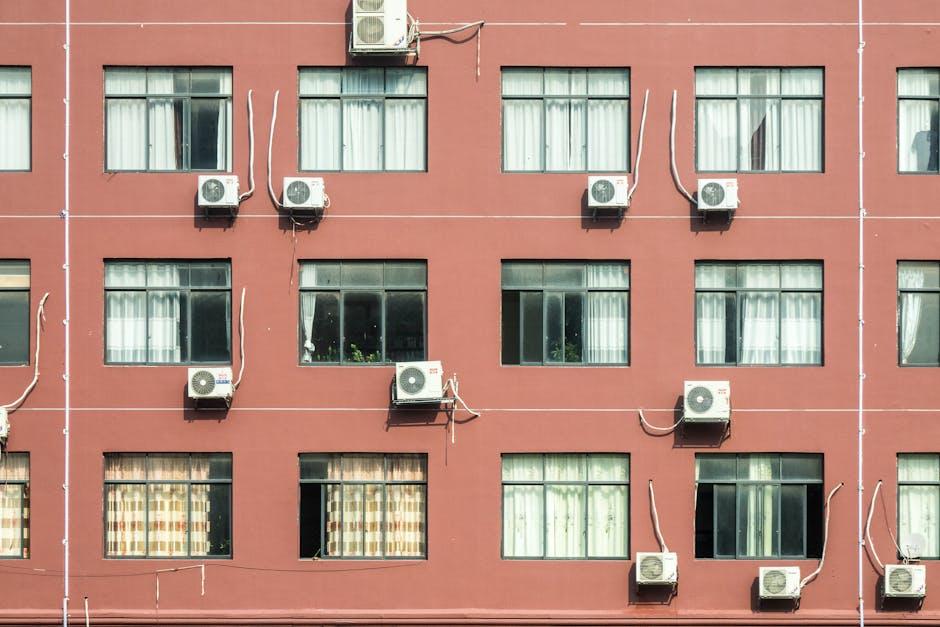
If you own or manage a commercial building in the UK, the TM44 air conditioning inspection is not a box-ticking exercise you can afford to ignore. It is a statutory duty under the Energy Performance of Buildings (England and Wales) Regulations 2012, and the financial consequences of non-compliance are sharpening. Right now, a missing or expired report attracts a fixed penalty of £300 per system. But the government is actively consulting on raising that figure to £800 per offence. For a building with three qualifying air conditioning units, that is the difference between a £900 penalty and a £2,400 one. This guide explains exactly what a TM44 ACI report is, who needs one, how to secure a Tm44 aci report to avoid fines, and why 2026 is the year to get your compliance house in order before the penalty regime tightens further.
Table of Contents
- What Is a TM44 Air Conditioning Inspection? (The Legal Baseline)
- The Real Cost of Non-Compliance: Fines in 2026
- How a TM44 ACI Report Helps You Avoid Fines (And Save Money)
- The TM44 Inspection Process: Step by Step
- Common TM44 Compliance Mistakes (And How to Avoid Them)
- Multi-Site Compliance: Managing TM44 Across a Property Portfolio
- Frequently Asked Questions About TM44 in 2026
- Secure Your TM44 ACI Report Today – Avoid Fines in 2026
What Is a TM44 Air Conditioning Inspection? (The Legal Baseline)
A TM44 inspection is a mandatory assessment of all air conditioning systems in a commercial building with a combined cooling output exceeding 12 kilowatts. The requirement sits within the Energy Performance of Buildings (England and Wales) Regulations 2012, with equivalent legislation covering Scotland and Northern Ireland. The purpose is straightforward: to measure how efficiently your cooling equipment is operating and to identify cost-effective improvements that reduce energy consumption.
The 12kW threshold catches out more building managers than any other single rule. This is not a per-unit limit. It is the combined cooling output of every air conditioning system on site. A small office with three 4kW split units has a total capacity of 12kW and is legally required to have a TM44 report. Ten 1.5kW wall-mounted splits in a retail unit total 15kW and trigger the same obligation. If you are unsure whether your building crosses the line, you should assume it does until a qualified assessor confirms otherwise.

The inspection must be repeated every five years. The clock starts from the date of the last inspection or, for new systems, from the date of installation. A lapse of even a single day places you in breach of the regulations. There is no grace period, no reminder service from the government, and no defence based on administrative oversight.
Inspections are classified into two levels. Level 3 covers simpler split and multi-split systems, where the outdoor condenser unit serves one or a handful of indoor units. Level 4 applies to complex systems: variable refrigerant flow (VRF), variable refrigerant volume (VRV), chilled water systems, and central plant serving multiple zones or floors. The distinction matters because it affects the scope of the inspection, the time required on site, and the cost. Booking the wrong level will delay your compliance and may leave you exposed.
Who Is Legally Responsible for the TM44 Report?
The primary legal responsibility falls on the building owner or landlord. If you hold the freehold or headlease on a commercial property, the duty is yours. However, lease agreements frequently shift this liability. Under a full repairing and insuring (FRI) lease, the tenant assumes responsibility for all statutory compliance, including TM44 inspections. If you are a tenant occupying commercial premises, check your lease terms immediately. Do not assume the landlord is handling it. Enforcement is carried out by Local Trading Standards Officers, who have the authority to request reports, issue penalty notices, and escalate non-compliance to prosecution. They are not part of the local council planning department, and they do not need to give you advance warning.
The Real Cost of Non-Compliance: Fines in 2026
The current penalty structure is already punitive enough to warrant urgent attention. A fixed penalty of £300 applies per system, not per building. A hotel with five qualifying air conditioning units faces a £1,500 fine if all five are non-compliant. A retail chain with twenty stores and a single non-compliant system in each faces £6,000 in penalties. These fines are not capped at a single issuance. Trading Standards can issue repeated penalties until the building becomes compliant, meaning the financial exposure grows with every week of inaction.
There is a second penalty that catches out those who delay. If a Trading Standards Officer requests a copy of your TM44 report and you fail to produce it within seven days, an additional £200 penalty applies. This is separate from the per-system fine and is charged regardless of whether you eventually produce a valid report. The seven-day clock starts from the date of the request, not from when you get around to reading the letter.

The most significant development in 2026 is the government consultation on increasing the fixed penalty from £300 to £800 per offence. The consultation, referenced by Elmhurst Energy in its industry briefings, signals a clear intent to strengthen enforcement. While the exact implementation date remains subject to the consultation outcome, the direction of travel is unmistakable. Building owners who act now lock in compliance at today’s costs and avoid the risk of waking up to an £800-per-system penalty regime later this year or in early 2027.
Beyond the direct fines, non-compliance carries hidden costs that rarely appear in compliance guides. Vital Direct has highlighted that some commercial property insurers view a lapsed TM44 report as a breach of statutory duty, which can invalidate a policy in the event of a claim linked to the air conditioning system. SEA Consulting has documented cases where missing TM44 reports delayed property sales and lease renewals, as solicitors increasingly flag the absence of a valid certificate during due diligence. A £300 fine is the least of your worries if a transaction collapses or an insurance claim is denied.
How Trading Standards Enforces TM44 Compliance
Trading Standards Officers do not wait for complaints. They actively check the Government National EPC Database for lapsed or missing TM44 reports. The database records every lodged certificate, and gaps are easy to identify. An officer can request a copy of your report at any time, without prior notice, and the seven-day production clock starts immediately. If you cannot produce a valid report, the penalty notice follows. Continued non-compliance can escalate to prosecution, though fixed penalties remain the most common enforcement route. The message is simple: if your report is not on the register, you are already visible to the enforcement authorities.
How a TM44 ACI Report Helps You Avoid Fines (And Save Money)
The most immediate benefit of holding a valid TM44 ACI report is that it keeps you penalty-free. When Trading Standards asks for your certificate, you produce it within seven days, and the matter closes. No fines, no escalation, no insurance complications. That alone justifies the cost of the inspection.
But the financial case extends well beyond fine avoidance. A TM44 inspection is an energy efficiency audit, and the savings it uncovers can be substantial. Consider the real-world example from ACI Reports: a UK university commissioned a TM44 inspection for a single campus building and discovered that its annual air conditioning costs could be reduced from £25,458 to £9,397. That is an annual saving of £16,061, identified and quantified by the inspection report. The recommendations included adjusting control settings, repairing refrigerant leaks, and rescheduling run times to match actual occupancy patterns. None of these required capital investment.
Vital Direct reports that following TM44 recommendations can reduce cooling energy costs by up to 20 percent. For a medium-sized office building spending £15,000 a year on air conditioning, that represents a £3,000 annual saving, year after year. The inspection typically pays for itself within the first twelve months, and the savings continue for the full five-year cycle until the next inspection is due.
The inspection also identifies operational issues that shorten equipment lifespan. Oversized systems cycle on and off too frequently, wearing out compressors. Refrigerant leaks reduce cooling capacity and force the system to work harder, increasing electricity consumption and risking catastrophic compressor failure. Worn components, dirty coils, and poorly calibrated controls all drive up running costs. A TM44 report flags these issues and provides a prioritised list of corrective actions.
There is a strategic dimension as well. Elmhurst Energy has positioned TM44 compliance as a data point for ISO 14001 environmental management systems. If your organisation reports on carbon emissions, ESG metrics, or corporate social responsibility targets, the TM44 report provides auditable evidence that you are managing your building’s energy performance. It is not just a compliance document; it is a sustainability credential.
The TM44 Inspection Process: Step by Step
Understanding the process removes the uncertainty that often leads to delay. Here is how it works, from initial check to final certificate.
Step 1: Check your system capacity. Walk your site and list every air conditioning unit, including wall-mounted splits, ceiling cassettes, and external condensers. Note the cooling output in kilowatts for each unit. If the nameplate data is unclear, your installer or maintenance contractor should have the specifications. Add the figures together. If the total exceeds 12kW, you need a TM44 inspection. Do not exclude units in server rooms, comms cabinets, or ancillary spaces. They all count toward the combined threshold.
Step 2: Verify your last inspection date. If you have a previous TM44 report, check the certificate date. If it is approaching five years old, book the renewal now. If you do not have a previous report, check the Government National EPC Database. A missing entry means you are either non-compliant or have never been inspected. Either way, you need to act.
Step 3: Book an accredited assessor. TM44 inspections can only be carried out by assessors accredited by a government-approved scheme. CCA Environmental provides accredited Level 3 and Level 4 inspections across the UK. When you book, the assessor will confirm which inspection level your systems require and provide a quotation based on the number and complexity of units on site.
Step 4: The on-site inspection. The assessor visits your premises and conducts a systematic evaluation of every air conditioning unit within scope. For a Level 3 inspection, this includes checking system efficiency, control settings, refrigerant charge, filter condition, and overall operational state. A Level 4 inspection goes further, examining the design and layout of central plant, chilled water distribution, and complex control strategies. The assessor will need access to all indoor and outdoor units, plant rooms, and control panels. The time on site varies from a couple of hours for a small Level 3 inspection to a full day or more for a large Level 4 system.
Step 5: Receive and file the report. After the inspection, the assessor produces a TM44 certificate and a recommendations report. The certificate confirms compliance and is lodged on the national register. The recommendations report details any efficiency improvements, ranked by cost-effectiveness. You must keep a copy of the report on file and ensure it is available for inspection if requested. A paper copy in a drawer is not sufficient if it has not been lodged on the register.
Level 3 vs. Level 4 Inspections: What’s the Difference?
Level 3 inspections apply to simpler split and multi-split systems. These are the most common in small to medium commercial premises: offices, shops, restaurants, and GP surgeries. The inspection is relatively straightforward, less intrusive, and lower in cost. Level 4 inspections cover complex systems: VRF, VRV, chilled water, and central plant. These require deeper technical analysis, longer on-site time, and a higher fee. If your building has a plant room with multiple chillers, a cooling tower, or a building management system controlling dozens of zones, you almost certainly need a Level 4 inspection. Confirm the level with your assessor before booking to avoid surprises on the day.
Common TM44 Compliance Mistakes (And How to Avoid Them)
The first and most frequent mistake is ignoring the 12kW combined threshold. Building managers look at a single 10kW unit and conclude they are below the limit, overlooking the three 2kW splits in meeting rooms that push the total to 16kW. Every unit on site counts. Add them all up.
The second mistake is letting the five-year cycle lapse. A certificate that expired yesterday is as useless as one that expired five years ago. Set a calendar reminder for four years and ten months from the date of your last inspection. Book the renewal before the expiry date, not after.
The third mistake is assuming the landlord is always responsible. Tenants with full repairing and insuring leases often carry the TM44 liability. If you signed a lease without checking the compliance clauses, check them now. The penalty will land on whoever the lease holds responsible, and pleading ignorance will not reduce the fine.
The fourth mistake is failing to lodge the report on the national register. The assessor typically handles this, but you should confirm it has been done. An un-lodged report is invisible to Trading Standards and offers no legal protection.
The fifth mistake is delaying until you are asked. By the time Trading Standards requests your report, you are already on their radar and the seven-day clock is ticking. If your report has expired, you cannot arrange an inspection, receive the certificate, and lodge it within seven days. You will incur the £200 late production penalty on top of the per-system fine. Proactive compliance is the only strategy that works.
Multi-Site Compliance: Managing TM44 Across a Property Portfolio
For businesses with multiple properties, TM44 compliance becomes a logistical exercise. Each site has its own inspection date, system configuration, and certificate expiry. Without a centralised tracking system, renewals slip through the cracks.
Start with a compliance register. A simple spreadsheet listing each property, the total system capacity, the inspection level required, the date of the last inspection, and the expiry date is the minimum viable tool. For larger portfolios, dedicated compliance software can automate reminders and store digital copies of certificates.
Bulk inspection pricing is worth pursuing. Assessors, including CCA Environmental, often offer reduced rates for portfolio-wide inspections. Grouping sites by region can reduce travel costs and administrative overhead.
Stagger your renewals. If you acquired or inspected all your properties at the same time, all your certificates will expire simultaneously. This creates a peak in cost and administrative workload every five years. Where possible, bring some inspections forward by a few months to spread the load.
Designate a single point of contact. Whether it is an internal facilities manager or an external compliance partner, one person should own the TM44 process across the portfolio. When Trading Standards calls, you need to know exactly who holds the certificates and can produce them within seven days.
Frequently Asked Questions About TM44 in 2026
What is the TM44 fine in 2026? The current fixed penalty is £300 per non-compliant system, with an additional £200 for failure to produce a report within seven days of a request. The government is consulting on raising the per-system penalty to £800. Check the latest guidance on the gov.uk website for the current position.
How often is a TM44 inspection required? Every five years from the date of the last inspection or, for new systems, from the date of installation. The five-year cycle is strict, and there is no grace period.
Can I do a TM44 inspection myself? No. The inspection must be carried out by an accredited assessor who is registered with a government-approved scheme. A maintenance contractor’s service report is not a substitute.
What happens if my TM44 certificate expires? You are immediately non-compliant and liable for penalties. You must arrange a new inspection as soon as possible. The expiry date is the last day of validity, not a suggestion.
Do I need a TM44 inspection for a brand new system? Yes. The five-year cycle starts from the date of installation. The first inspection is due five years after commissioning, not five years after you bought the building.
Secure Your TM44 ACI Report Today – Avoid Fines in 2026
TM44 compliance is a legal requirement, not a choice. The 12kW threshold captures far more buildings than most managers realise, the five-year cycle is unforgiving, and the fines are rising. A valid TM44 ACI report is your defence against penalties that can reach hundreds or thousands of pounds, and the efficiency savings it identifies often cover the cost of the inspection many times over.
CCA Environmental provides accredited TM44 inspections across the UK, covering both Level 3 and Level 4 systems. Whether you manage a single office, a retail portfolio, or a complex central plant, we can assess your compliance status, carry out the inspection, and lodge your certificate on the national register. Contact us today to check your compliance position, request a quotation, or book an inspection. The sooner you act, the sooner you are protected.