
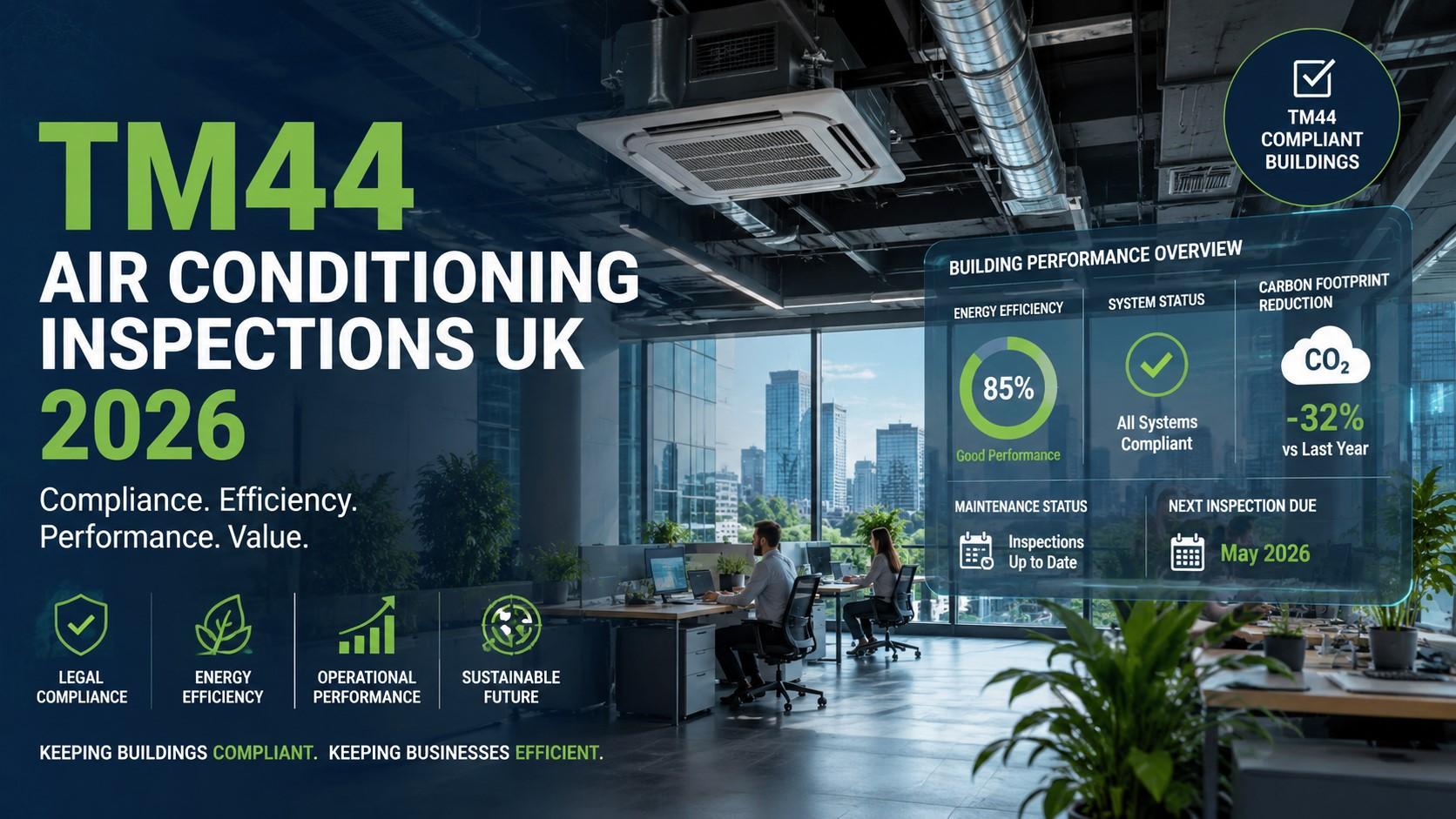
As energy regulations continue to evolve across the UK, commercial building owners are under increasing pressure to improve operational efficiency and maintain compliance. One area that is often overlooked is the performance of air conditioning systems.
In 2026, TM44 air conditioning inspections remain a legal requirement for many commercial properties. However, these inspections are no longer viewed purely as a compliance exercise. Businesses are increasingly using them to reduce energy waste, lower operating costs, and support wider sustainability goals.
With rising energy prices and growing ESG expectations, understanding how TM44 inspections work is becoming increasingly important for landlords, facilities managers, and commercial property owners.
This guide explains the latest requirements, which buildings are affected, and why inspections now play a bigger role in commercial energy management.
What is a TM44 Air Conditioning Inspection?
A TM44 inspection is an official assessment of the energy performance and efficiency of commercial air conditioning systems.
The inspection is designed to evaluate how effectively cooling systems operate and whether they are consuming unnecessary energy. During the assessment, an accredited energy assessor reviews:
- System efficiency
- Maintenance records
- Equipment sizing
- Control settings
- Overall operational performance
Once completed, businesses receive a report containing recommendations that may help improve efficiency and reduce operational costs.
The regulations apply to many non-domestic buildings throughout the UK and form part of wider efforts to reduce carbon emissions from commercial properties.
Which Commercial Buildings Require a TM44 Inspection?
A TM44 inspection is generally required when a building has air conditioning systems with a combined cooling output exceeding 12kW.
This threshold applies to a wide range of commercial environments, including:
- Offices
- Retail units
- Hotels
- Warehouses
- Educational facilities
- Healthcare buildings
- Leisure centres
One of the most common misconceptions is that only large cooling systems require inspection. In reality, several smaller units operating within the same property can collectively exceed the 12kW threshold.
As a result, many businesses unknowingly fall within the scope of the regulations.
How Often Are TM44 Inspections Required?
In most cases, inspections must be completed every five years.
The resulting report should be retained for compliance purposes and may be requested during:
- Property transactions
- Lease agreements
- Compliance audits
- Facilities management reviews
If significant changes are made to the cooling system, businesses may also need to reassess whether a new inspection is required.
Failing to maintain valid inspection records can lead to enforcement action and financial penalties from local authorities.
Why TM44 Compliance Matters More in 2026
Energy efficiency is now a major commercial priority across the UK property sector.
For many businesses, air conditioning systems account for a significant proportion of overall energy usage and play an important role in overall energy efficiency. Poorly maintained or inefficient systems can quietly increase operational costs over time while also contributing to higher carbon emissions.
In 2026, several factors are driving greater attention towards cooling system performance:
Rising Energy Costs
Energy prices continue to place pressure on operational budgets. Even relatively minor inefficiencies within HVAC systems can lead to substantial long-term expenses for larger commercial buildings.
ESG and Sustainability Expectations
Businesses are increasingly expected to demonstrate environmental responsibility and reduce energy waste as ESG regulations continue to evolve across the UK. Efficient building systems now play a much larger role in sustainability reporting and corporate ESG strategies.
Greater Focus on Building Performance
Investors, occupiers, and regulators are paying closer attention to how commercial buildings actually perform in operation — not just how they were designed.
As a result, inspections are becoming an important part of broader building performance management, alongside TM54 Operational Energy Assessments that evaluate real-world energy usage in commercial buildings.
Common Issues Identified During Inspections
Many TM44 assessments uncover operational problems that have developed gradually over time.
In some cases, systems have simply not been reviewed for years. In others, buildings have changed usage patterns while cooling systems remained configured for outdated occupancy requirements.
Some of the most common issues include poor system controls, inefficient scheduling, and inadequate maintenance.
Inefficient Operating Schedules
Cooling systems are frequently left running outside normal business hours, particularly in offices and retail environments. Incorrect timer settings or manual overrides can significantly increase energy consumption.
Dirty or Poorly Maintained Equipment
Blocked filters and neglected servicing often reduce airflow and force systems to work harder than necessary. This not only increases energy usage but may also shorten equipment lifespan.
Oversized Systems
Some buildings operate systems that are larger than current operational requirements demand. Oversized equipment can cycle inefficiently and waste considerable amounts of energy over time.
Simultaneous Heating and Cooling
This issue is particularly common in larger commercial properties. Different parts of a building may unknowingly heat and cool spaces at the same time due to poorly coordinated controls.
The Financial Impact of Inefficient Cooling Systems
Many organisations only recognise the true financial impact of inefficient HVAC systems once energy costs begin affecting profit margins.
Even relatively small inefficiencies can create substantial operational expenses over the lifespan of a commercial building.
At CCA Environmental Ltd, businesses often discover that simple operational adjustments can deliver meaningful savings without requiring major infrastructure upgrades.
In many cases, recommendations following an inspection may help businesses:
- Reduce electricity consumption
- Improve equipment lifespan
- Lower maintenance costs
- Improve occupant comfort
- Support wider energy efficiency objectives
Simple changes such as recalibrating controls, improving maintenance schedules, or updating operating times can often produce immediate improvements.
TM44 Inspections and Commercial Property Value
Energy performance is becoming increasingly important in commercial property transactions.
Investors, tenants, and buyers now place greater emphasis on operational efficiency, sustainability performance, and regulatory compliance when evaluating buildings.
A poorly maintained cooling system may create concerns around:
- Future operational costs
- Deferred maintenance
- Energy inefficiency
- Compliance risk
By contrast, properties with properly managed systems and valid inspection documentation are often viewed more favourably during due diligence processes.
As environmental standards continue to evolve, efficient building operation is becoming more closely linked to long-term asset value and wider MEES compliance objectives.
Preparing for a TM44 Inspection
Preparing for an inspection is typically straightforward when systems are properly maintained and documented.
Businesses should ensure maintenance records are accessible and that key plant areas can be safely inspected. It is also beneficial to review current operating schedules and controls before the assessment takes place.
Retaining previous reports can also help assessors identify recurring issues or track improvements over time.
A proactive approach not only supports compliance but may also improve the quality of recommendations provided during the inspection.
The Role of Professional Energy Assessors
The quality of a TM44 inspection often depends heavily on the experience and expertise of the assessor conducting it.
A thorough assessment should provide more than basic compliance confirmation. It should also help businesses understand how their systems are operating in practice and where improvements can realistically be made.
At CCA Environmental Ltd, inspections are approached as part of a wider building performance strategy focused on efficiency, compliance, and long-term operational improvement.
Professional advice can be particularly valuable for organisations managing multiple sites or complex commercial properties.
The Future of Building Energy Compliance
The UK’s long-term environmental strategy continues to place increasing emphasis on operational building performance.
Over the coming years, businesses can expect:
- Greater scrutiny of energy usage
- Stronger ESG reporting expectations
- Increased pressure to reduce carbon emissions
- Higher standards for commercial property compliance
Air conditioning systems are likely to remain an important focus area due to their contribution to overall building energy consumption.
Organisations that proactively improve efficiency today are likely to be better prepared for future regulatory and commercial expectations.
Conclusion
TM44 air conditioning inspections remain an important legal requirement for many UK businesses in 2026, but their value extends far beyond compliance alone.
For commercial property owners and facilities managers, inspections provide an opportunity to identify inefficiencies, reduce operational costs, improve sustainability performance, and strengthen long-term building management strategies.
As energy costs continue to rise and environmental expectations become more demanding, proactive management of cooling systems is becoming increasingly important across the commercial property sector.
Businesses that treat inspections as part of a broader energy efficiency strategy are likely to gain both operational and financial advantages over time.
Frequently Asked Questions
What is a TM44 air conditioning inspection?
A TM44 inspection is a mandatory energy assessment of commercial air conditioning systems. It evaluates system efficiency, operating performance, and opportunities to reduce energy consumption.
Which buildings require TM44 air conditioning inspections?
Commercial buildings with air conditioning systems exceeding a combined cooling capacity of 12kW are generally required to have inspections carried out every five years.
How often must a TM44 inspection be completed?
In most cases, TM44 inspections must be completed every five years to remain compliant with UK regulations.
What happens if a business does not have a valid TM44 inspection?
Failure to comply may result in enforcement action and financial penalties from local authorities. Missing inspection reports can also create complications during property transactions or compliance reviews.
Can TM44 inspections help reduce energy costs?
Yes. Inspections often identify inefficiencies such as poor controls, incorrect operating schedules, or maintenance issues that may be increasing energy consumption unnecessarily.
Are TM44 inspections linked to ESG and sustainability goals?
Yes. Efficient air conditioning systems can help businesses reduce energy waste, lower carbon emissions, and support wider ESG and sustainability objectives.