
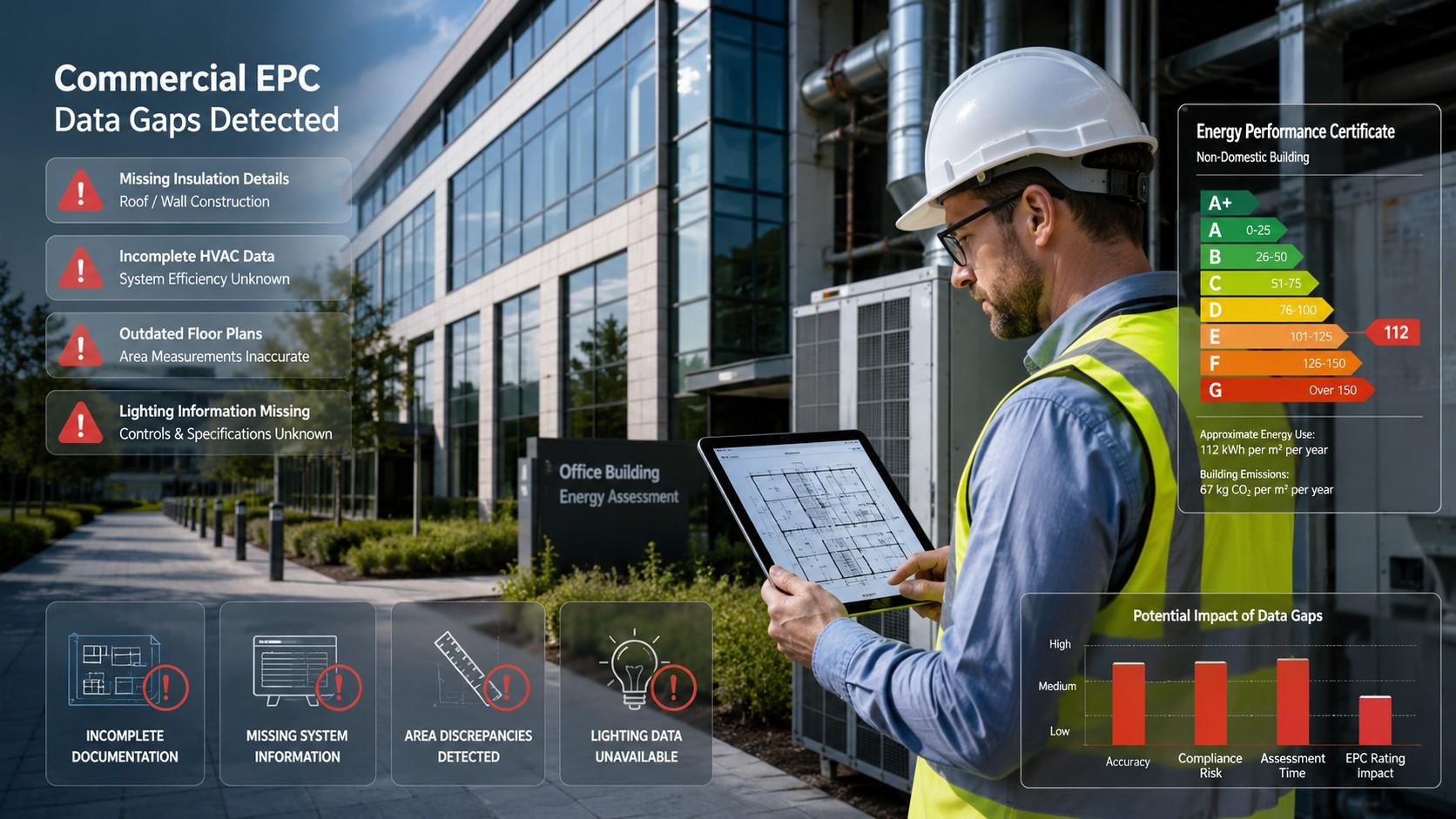
Commercial Energy Performance Certificates (EPCs) are a legal requirement when selling, leasing, or constructing non-domestic buildings in the UK. However, despite being a routine compliance requirement, many property owners experience unexpected delays during certification.
In most cases, these delays are not caused by the assessment itself, but by incomplete or missing building information. These data gaps force assessors to rely on assumptions or request additional verification, which slows down the entire process.
Understanding where these gaps occur and how to prevent them can significantly improve turnaround times and reduce compliance risks.
Why missing building information causes certification delays
A Commercial EPC relies on accurate input data covering construction, services, and occupancy. When this information is unavailable, assessors must either estimate values or request clarification, both of which delay certification.
In many UK commercial properties, especially older or multi-tenanted buildings, documentation is fragmented due to refurbishments or changes in tenancy over time. This makes it difficult to build a complete energy profile in a single assessment.
From a compliance perspective, missing or inaccurate data can also create regulatory risks, particularly under frameworks such as MEES compliance for commercial landlords, where buildings must meet minimum energy efficiency standards before being let.
Incomplete construction and fabric data
One of the most common causes of EPC delays is missing information about the physical structure of the building. This includes walls, roofs, floors, insulation levels, and glazing types.
Older commercial buildings are particularly affected because original construction records are often unavailable, and later refurbishments may not have been formally documented.
Typical issues include:
- Unknown insulation thickness in roof or wall cavities
- Missing details about construction type (solid or cavity walls)
- Lack of glazing specifications or window upgrade records
- No documentation of previous fabric improvements
When this data is missing, assessors must rely on conservative assumptions, which can slow down reporting and sometimes impact the final EPC rating.
Mechanical and electrical system uncertainty
Building services data is another major source of delays. Heating, ventilation, and cooling systems play a key role in EPC calculations, but their specifications are often incomplete or outdated.
Inaccurate or missing system data frequently leads to clarification requests, especially where multiple upgrades have taken place over time without central documentation updates.
This becomes particularly relevant where HVAC systems are also subject to separate compliance checks such as TM44 air conditioning inspection requirements, which often overlap with EPC-related building data requirements.
Common missing details include:
- Boiler efficiency ratings and installation dates
- HVAC system type (VRF, split, or centralised systems)
- Ventilation design and control mechanisms
- Maintenance and servicing history
Lighting and control system documentation gaps
Lighting is one of the most underestimated areas affecting EPC assessments. Even small gaps in lighting data can lead to delays.
Assessors need to understand not only the type of lighting installed but also how it is controlled and operated.
In many commercial buildings, lighting systems are upgraded in phases, which results in mixed installations across different floors or zones. Without clear documentation, assessors must manually verify each area during inspection.
Common issues include:
- Unclear LED upgrade history
- Missing control system details (manual vs automated)
- Inconsistent lighting types across floors
- Lack of wattage or fixture data
Why EPC delays are more common in multi-tenanted buildings
Multi-let buildings introduce additional complexity because responsibility for building systems is often shared between landlords and tenants.
Internal modifications, tenant fit-outs, and independent upgrades can all impact EPC data quality, especially when records are not centrally managed.
In these cases, delays often arise from access restrictions and fragmented documentation across different occupiers.
This is where a properly managed commercial EPC process becomes critical, as assessors must consolidate data from multiple sources before producing an accurate rating.
Floor area discrepancies and outdated plans
Accurate floor area measurement is essential for EPC calculations, yet many commercial properties still rely on outdated architectural drawings or incomplete layout records. Over time, buildings often undergo changes such as partition wall installations, extensions, mezzanine additions, or internal reconfigurations that are never fully updated within official documentation.
These inconsistencies create significant problems during the EPC assessment process. Assessors may need to re-measure parts of the building during inspection to ensure the floor area matches the current layout and usage. This not only increases the time required on-site but can also delay the final report while updated measurements and calculations are verified.
In some cases, assessors may request revised architectural plans or additional clarification from property owners and managing agents before the EPC can be completed. Even relatively small discrepancies in floor area data can affect the accuracy of the energy model, particularly in larger or multi-tenanted commercial buildings where energy usage is calculated across multiple zones and occupancy types.
The impact of inconsistent historical EPC records
Many buildings have undergone multiple EPC assessments over time, particularly during lease changes or refurbishments. However, these records are not always consistent.
Conflicting data between previous EPCs and current site conditions often requires additional investigation from assessors.
This becomes especially important when assessing asset performance and long-term value, as EPC ratings affect commercial property value plays a growing role in investment decisions and rental expectations.
What happens during a Commercial EPC assessment on site
Understanding the assessment process helps explain where delays typically occur. A Commercial EPC inspection follows a structured workflow.
First, the assessor conducts a walkthrough of the building to understand layout, usage, and access constraints. This includes plant rooms, occupied areas, and shared spaces in multi-tenanted properties.
Next, the assessor collects technical data on construction materials, insulation levels, lighting systems, and building services. This stage is highly dependent on documentation availability.
Finally, measurements and system verification are completed. If any information is missing at this stage, the assessor must either estimate values or pause the process to request additional data.
Delays most commonly occur when:
- Plant rooms are inaccessible
- Tenant spaces cannot be entered
- Technical documents are unavailable on-site
How missing data extends EPC timelines in practice
Data gaps do not just cause inconvenience—they directly extend certification timelines in predictable ways.
A minor missing document, such as lighting specifications, may add 1–2 days while clarification is provided. More complex issues, such as missing HVAC details or access restrictions, can extend the process to several days.
Typical delay scenarios:
- 1–2 days: Missing system specifications or clarification emails
- 3–5 days: Tenant access restrictions or incomplete floor data
- 7+ days: Missing construction records or multiple unresolved data gaps
In large portfolios, these delays compound across multiple assets, significantly affecting compliance schedules and leasing timelines.
How assessor clarification cycles slow the process
When data is missing or unclear, assessors must contact property owners or managing agents for clarification. Each round of communication adds delay to the certification process.
These delays are often not due to complexity, but due to response time gaps between stakeholders such as tenants, facilities teams, and external contractors.
Improving coordination and centralising documentation is one of the most effective ways to reduce these delays.
How better preparation improves EPC turnaround times
Preparation plays a critical role in reducing EPC delays. When building data is organised in advance, assessors can complete reports much more efficiently.
This includes ensuring that all technical documentation, system specifications, and floor plans are available before inspection.
A structured approach to compliance preparation, such as preparing for commercial EPC assessments step-by-step, helps reduce uncertainty and ensures smoother assessment workflows.
Key preparation responsibilities include:
- Confirming full access to all building areas before inspection
- Gathering HVAC, heating, and lighting documentation
- Updating floor plans to reflect current layouts
- Collating refurbishment and maintenance records
- Identifying tenant-controlled modifications early
Professional providers such as CCA Environmental Ltd often support clients at this stage by identifying missing data before inspection, reducing unnecessary delays and repeat visits.
Long-term benefits of structured building data management
Beyond reducing delays, maintaining structured building data significantly improves long-term compliance efficiency.
When building records are regularly updated, EPC assessments become faster, more accurate, and far less disruptive.
There is also a direct link between energy performance improvements and operational efficiency, particularly when aligned with broader strategies such as improving energy efficiency in commercial buildings.
Over time, strong data management delivers:
- Faster EPC certification cycles
- Reduced reliance on assumptions
- Improved accuracy in energy modelling
- Better planning for refurbishment decisions
- Stronger asset valuation outcomes
Conclusion
Data gaps remain one of the most avoidable causes of delay in EPC certification. From missing construction details and system specifications to inconsistent documentation and access issues, these gaps can significantly slow down the process.
By improving data management and preparing information in advance, property owners can ensure faster certification and more reliable results.
A well-managed commercial EPC process is not just about compliance—it is about efficiency, accuracy, and protecting long-term property value in a competitive and regulated market.
Frequently Asked Questions
What are the most common data gaps in Commercial EPC assessments?
The most common gaps include missing construction details, incomplete heating system specifications, outdated floor plans, and incomplete lighting system information.
Why do data gaps delay EPC certification?
Because assessors must verify missing information or rely on assumptions, which requires additional time and may trigger clarification cycles.
Do multi-tenant buildings take longer for EPC certification?
Yes, due to fragmented documentation, tenant modifications, and restricted access to key building areas.
Can missing data affect EPC ratings?
Yes, missing data often leads to conservative assumptions, which can negatively affect the final EPC rating.
How can EPC delays be reduced?
By preparing documentation in advance, ensuring full site access, and maintaining accurate, up-to-date building records.