
For decades, the British relationship with temperature has been defined by a single, overriding priority: staying warm. Our building regulations, our energy policies, our very architectural identity are all shaped by the need to keep the cold out and the heat in. Yet a quiet transformation is underway, one that challenges this foundational assumption. As global temperatures climb and our summers grow longer, hotter, and more humid, the need for cooling is no longer a distant concern for the UK. It is a pressing infrastructure challenge, a strategic blind spot that demands immediate attention from policymakers, property developers, and business owners alike. This year, 2026, marks a critical inflection point where inaction begins to carry measurable costs.
Table of Contents
- The Global Context: Why the Need for Cooling Is Exploding
- The UK’s Cooling Blind Spot: A Nation Built for Heating
- How Climate Change Is Accelerating UK Cooling Demand
- The "Cold Crunch": Why the UK Grid Needs to Prepare
- Why Aren’t UK Consumers Buying Efficient Cooling?
- Solutions for the UK: Bridging the Cooling Gap
- The Business Case for CCA Environmental
- Frequently Asked Questions About Cooling in the UK
The Global Context: Why the Need for Cooling Is Exploding
To understand the urgency of the UK’s situation, it is essential to first grasp the scale of what is happening globally. Cooling is already one of the most significant consumers of electricity on the planet. According to the International Energy Agency, air conditioners and electric fans account for nearly 20 percent of total electricity used in buildings worldwide. When you broaden the lens to include all global electricity consumption, cooling represents roughly 10 percent of the total. This is not a niche concern; it is a central pillar of the world’s energy system, and it is growing at an extraordinary rate.

The IEA projects that energy demand for space cooling will more than triple by 2050. To put that figure into perspective, the additional electricity required will equal the combined consumption of China and India today, two of the world’s most populous and energy-hungry nations. This surge is driven by a simple, powerful dynamic: most homes in hot countries have not yet purchased their first air conditioner. As incomes rise and urbanisation accelerates across Asia, Africa, and Latin America, the global stock of AC units is set to explode. By 2050, around two-thirds of the world’s households could have an air conditioner, with China, India, and Indonesia alone accounting for half of the total.
What makes this trajectory particularly frustrating from an energy and climate perspective is the staggering efficiency gap that exists right now. The average air conditioner sold on the global market today operates at less than half the efficiency of the best units readily available on the same shelves. Compared to the most advanced technology currently in production, the typical unit achieves barely one-third of what is possible. This is not a problem of invention; it is a problem of adoption. The IEA calculates that a concerted global push towards efficient cooling could cut future energy demand by 45 percent, saving an estimated USD 3 trillion in investment and running costs between now and 2050. The technology exists. The economics are favourable. What is missing is the policy framework and consumer awareness to bridge the gap.
The UK’s Cooling Blind Spot: A Nation Built for Heating
The United Kingdom occupies a peculiar position in this global narrative. Unlike Southern Europe, where air conditioning has been a standard feature of life for decades, or the United States, where ducted systems are ubiquitous, the UK has historically treated cooling as an afterthought. Our building stock, from Victorian terraces to post-war semis and modern apartment blocks, has been designed and regulated almost exclusively around the retention of heat. Current cooling demand in the UK is small by international standards, accounting for roughly 10 percent of total electricity use. But this figure is deceptive, and it is changing rapidly.

A 2023 study published through ScienceDirect explicitly frames cooling as a "hotting up" issue for the UK, one that is significantly under-represented in both academic research and government policy. The authors argue that while the UK has developed sophisticated models and robust regulations for heating demand, the equivalent infrastructure for cooling is notably absent. This policy gap is not merely an academic oversight; it has real-world consequences as the climate continues to warm. The UK has a detailed strategy for decarbonising heat, complete with grant schemes and efficiency standards. There is no comparable framework for managing the coming surge in cooling demand.
One factor that makes the UK’s position particularly challenging is humidity. Standard models for projecting future cooling demand rely heavily on cooling degree days, a metric based on air temperature. These models work reasonably well in dry climates, but they systematically underestimate demand in humid regions. The UK’s increasingly muggy summers, where high temperatures combine with significant moisture in the air, create a level of thermal discomfort that temperature alone cannot capture. When humidity is high, the human body’s ability to cool itself through perspiration is impaired, making the perceived need for mechanical cooling far greater than a simple thermometer reading would suggest. The projections we have are almost certainly too conservative.
How Climate Change Is Accelerating UK Cooling Demand
The link between a warming climate and increased cooling demand is direct and inescapable. As average temperatures rise and extreme heat events become more frequent, the number of days on which a building requires active cooling climbs accordingly. Data from the United States, where 97 percent of locations analysed experienced an increase in cooling degree days between 1970 and 2022, provides a stark preview of the UK’s likely trajectory. The US Energy Information Administration projects a 71 percent increase in household cooling demand by 2050. While the UK starts from a lower base, the underlying climatic trend points in the same direction.
This creates a dangerous feedback loop. Rising temperatures drive increased AC use, which drives higher electricity demand. If that electricity is generated from fossil fuels, the resulting emissions contribute to further warming, which in turn drives even greater cooling demand. Breaking this cycle requires a dual approach: decarbonising the electricity grid while simultaneously ensuring that the cooling equipment being installed is as efficient as possible. Relying on a clean grid to compensate for inefficient appliances is a recipe for unnecessary strain and higher costs.
It is also important to recognise that cooling has moved beyond the realm of comfort and into the territory of health necessity. During extreme heat events, vulnerable populations, including the elderly, young children, and those with respiratory or cardiovascular conditions, face significantly elevated risks. The UK Health Security Agency now issues heat-health alerts as a matter of routine during the summer months. For care homes, hospitals, and social housing, the ability to maintain safe indoor temperatures is no longer optional. It is a fundamental duty of care, and one that our current building stock is often ill-equipped to fulfil.
The "Cold Crunch": Why the UK Grid Needs to Prepare
The International Energy Agency has coined a memorable phrase for the coming surge in cooling demand: the "cold crunch." The term is deliberately chosen to evoke the energy crises that have periodically shaken the global economy, and to underscore the urgency of proactive policy intervention. The parallel is apt. Just as a sudden spike in heating demand during a cold winter can strain gas supplies and electricity grids, a prolonged heatwave can push summer electricity demand to unprecedented levels.
There is a partial mitigating factor: peak cooling demand tends to coincide with peak solar generation. The hottest part of the day, when air conditioners are working hardest, is also when photovoltaic panels are producing at their maximum. This alignment is genuinely helpful for managing a renewables-heavy grid. The problem arises in the evening, when solar output drops off but buildings retain the heat absorbed during the day. This residual thermal load can persist for hours, requiring generation from other sources precisely when demand is still high.
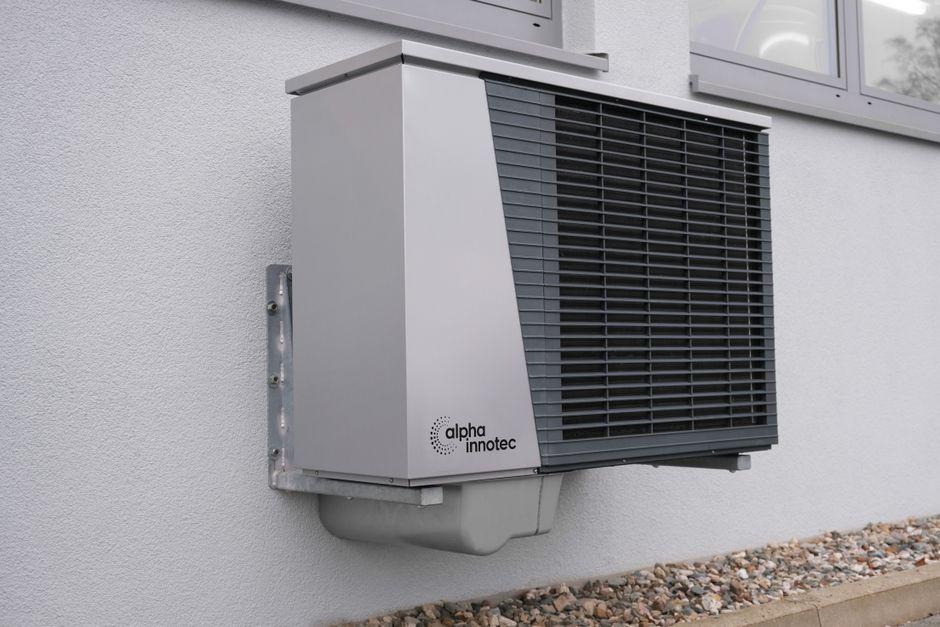
Without proactive efficiency standards and demand-side management, the UK could find itself facing summer grid strain analogous to the winter heating crunches that have historically dominated energy planning. The good news is that a technological crossover already exists. Heat pumps, which the UK government is actively promoting as a low-carbon heating solution through the Boiler Upgrade Scheme, are inherently reversible. The same device that warms a building in January can cool it in July. This dual-use potential is currently under-exploited in policy terms, representing a significant missed opportunity to address heating and cooling through a single, integrated strategy.
Why Aren’t UK Consumers Buying Efficient Cooling?
If the technology for efficient cooling exists and the long-term savings are demonstrable, why is adoption so slow? The barriers are both economic and informational, and they are deeply embedded in the structure of the UK market.
The most immediate obstacle is upfront cost. High-efficiency air conditioning units and reversible heat pumps carry a higher purchase price than their less efficient counterparts. For a household or a small business facing immediate budget pressures, the promise of lower energy bills over a decade can struggle to compete with the reality of a larger invoice today. This is a classic short-termism problem, and it is compounded by a widespread lack of consumer awareness. Most buyers simply do not know that the average unit on the market operates at less than half the efficiency of the best available option. The information asymmetry is enormous, and it tilts the market towards cheaper, less efficient equipment.
The split incentive problem is particularly acute in the rental sector. In properties where the landlord pays for capital improvements but the tenant pays the energy bills, there is almost no incentive for the landlord to invest in efficient cooling. The tenant benefits from lower running costs, but the landlord bears the installation expense. This dynamic, familiar from decades of debate over heating efficiency, applies with equal force to cooling and requires regulatory intervention to resolve.
Installation barriers further complicate the picture. Many UK homes, particularly older properties, lack the ductwork or external space required for conventional air conditioning systems. Retrofitting can be expensive and disruptive, deterring all but the most determined homeowners. Finally, there is the persistent neglect of passive cooling strategies. The UK’s building stock is designed to retain heat, a virtue in winter that becomes a liability in summer. Simple, low-cost measures such as external shading, reflective roofing materials, and improved natural ventilation are often overlooked in favour of mechanical solutions, even though they can dramatically reduce the cooling load before an AC unit is ever switched on.
Solutions for the UK: Bridging the Cooling Gap
Addressing the UK’s cooling challenge requires a coordinated strategy that spans regulation, incentives, building design, and social policy. The pieces are available; what is needed is the political will and institutional focus to assemble them.
First, the UK should adopt minimum efficiency standards for air conditioning units sold on the domestic market, aligned with or exceeding the European Union’s Energy Labelling Directive. By setting a floor on performance, the government can eliminate the least efficient equipment from the market, delivering immediate energy savings and emissions reductions without requiring consumers to become experts in thermodynamic ratings.
Second, the dual-use potential of heat pumps should be placed at the centre of the UK’s decarbonisation strategy. Current government subsidies through the Boiler Upgrade Scheme are framed almost exclusively around heating. Expanding the messaging and the eligibility criteria to explicitly include cooling would accelerate the deployment of efficient, reversible systems that serve both needs. This is not a separate policy challenge; it is an extension of an existing one.
Third, building regulations must begin to take passive cooling seriously. New builds and major renovations should be required to incorporate shading, natural ventilation pathways, and green infrastructure such as green roofs and reflective materials. These measures reduce the cooling load at source, making whatever mechanical system is eventually installed smaller, cheaper, and less energy-intensive to run. The technology is not exotic; it is simply under-specified.
Fourth, the government must address the social equity dimension of rising cooling demand. Just as fuel poverty has become a recognised policy issue, "cooling poverty" threatens to create a new divide between those who can afford to keep their homes safe during heatwaves and those who cannot. Targeted support for low-income households, particularly those containing vulnerable individuals, should be developed now, before the problem becomes acute.
Finally, the UK needs better data. Current cooling demand models, largely imported from other contexts, do not adequately account for the specific humidity and urban heat island effects that characterise British cities. Investing in UK-specific research will ensure that policy decisions are based on accurate projections rather than extrapolations from dissimilar climates.
The Business Case for CCA Environmental
For organisations like CCA Environmental, the shifting landscape presents a significant commercial opportunity. As the need for cooling grows across the UK, businesses, schools, healthcare facilities, and public buildings will require expert guidance to navigate an increasingly complex set of technical, regulatory, and financial considerations. The clients who act early will secure systems that are more efficient, more reliable, and more cost-effective over their operational lifetime.
CCA Environmental is well positioned to serve as the partner of choice for organisations seeking to address the "cold crunch" with intelligence and foresight. By offering assessments that integrate passive cooling strategies with high-efficiency mechanical systems, the company can help clients reduce both their capital expenditure and their long-term running costs. Sustainability is not a constraint on this process; it is the organising principle that delivers better outcomes. The question is no longer if the UK needs more cooling, but how we do it intelligently, efficiently, and sustainably.
Frequently Asked Questions About Cooling in the UK
Is air conditioning becoming necessary in the UK? Yes, particularly in commercial buildings, new-build flats with large glazed areas, and homes occupied by vulnerable individuals. What was once considered a luxury is increasingly a matter of health and productivity during the summer months.
Will cooling increase my energy bills significantly? It can, especially if an inefficient unit is installed. However, investing in high-efficiency equipment rated A+++ or opting for a reversible heat pump can mitigate long-term costs substantially. The key is to focus on total lifecycle cost rather than the upfront purchase price.
What is the most efficient cooling solution for a UK home? A reverse-cycle heat pump offers both heating and cooling with high efficiency, particularly when paired with good insulation and sensible passive design measures. It eliminates the need for separate heating and cooling systems, simplifying maintenance and reducing overall capital cost.
Does the UK government offer grants for cooling? Currently, there is no dedicated cooling grant. The Boiler Upgrade Scheme covers heat pumps, which can provide cooling, but the scheme’s framing is heavily oriented towards heating. Policy change is widely expected by 2026 to 2027 as the cooling agenda gains political traction.