
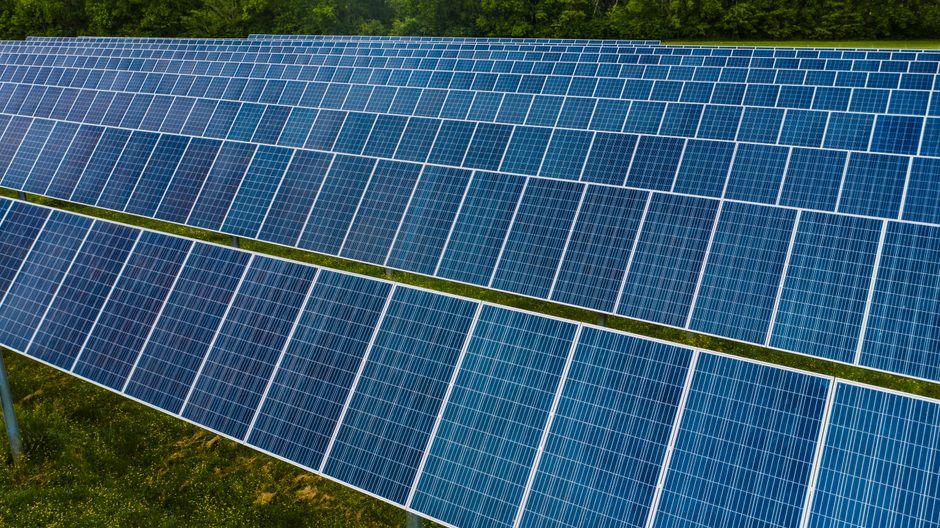
Solar PV in the UK has moved firmly from niche eco-investment to mainstream home improvement. If you are still wondering whether British weather can justify the outlay, consider this: the UK now has over 21.5 GW of installed solar capacity, generating roughly 6.4% of the nation’s annual electricity. Our solar resource is comparable to Germany, a global leader in the technology, and installations now sit on one in every twenty British buildings. This guide cuts through the noise to give you a clear, 2026 view of costs, savings, technology choices, and the practical steps for getting panels on your roof.
Table of Contents
- How Does Solar PV Work? A Simple Explanation
- Is the UK Sunny Enough for Solar Panels?
- Solar PV Costs in the UK (2026 Update)
- How Much Can You Save? Solar PV Savings & Payback
- Practical Suitability: Is Your Home Right for Solar PV?
- Solar Panel Types: Which Technology Is Best in 2026?
- Government Grants and Support Schemes (2026 Update)
- Solar Panel Maintenance and Long-Term Costs
- Environmental Impact and Recycling
- Commercial and Industrial Solar PV Opportunities
- Energy Storage: Batteries and Grid Flexibility
- Frequently Asked Questions About Solar PV in the UK
- Conclusion: Is Solar PV Worth It in the UK in 2026?
How Does Solar PV Work? A Simple Explanation
Solar photovoltaic panels contain cells, typically made from layers of silicon, that generate an electric charge when exposed to daylight. This is not a process that relies on blazing heat or direct sunshine; it works on irradiance, meaning your panels start producing power from the moment the sun rises, even through light cloud.
The electricity generated is direct current (DC). Because your home runs on alternating current (AC), a device called an inverter is installed alongside the panels to convert the power into a usable form. From there, the electricity flows to your consumer unit, supplying your appliances. If your system generates more than you need at any given moment, the surplus is either stored in a home battery for later use or exported to the National Grid. Under the Smart Export Guarantee, your energy supplier pays you for every kilowatt-hour you send back. A typical 4.5 kWp system in southern England will generate between 3,800 and 4,200 kWh per year, with output scaling down modestly for properties further north.
Is the UK Sunny Enough for Solar Panels?
The short answer is yes. The UK’s annual insolation, the measure of solar energy received per square metre, ranges from 750 to 1,100 kWh/m². This puts us on a par with central European nations that have far larger solar fleets. London, for instance, receives around 0.52 kWh/m² per day in December and 4.74 kWh/m² per day in July. The seasonal spread is wide, but the year-round viability is solid.
Modern panels are actually more efficient in cooler conditions. The UK’s mild climate helps panels operate closer to their optimal temperature, avoiding the efficiency losses seen in scorching heat. On 23 April 2026, UK solar generation hit an all-time peak of 15,420 MW, briefly providing over 30% of the country’s power needs. Capacity factors for UK solar, the ratio of actual output to theoretical maximum, sit between 9.8% and 11.4%. Those figures are typical for northern Europe and are fully factored into the financial models that make solar a sensible long-term purchase.
Solar PV Costs in the UK (2026 Update)
Typical Installation Prices
A standard domestic 4.5 kWp solar panel system costs approximately £6,100 fully installed in 2026. A smaller 3.5 kWp system often comes in at a similar price point, reflecting the fixed costs of scaffolding, labour, and inverter supply that do not scale down neatly with panel count. For larger homes with higher energy demands, a 6 to 8 kWp system typically ranges from £8,000 to £12,000.
These prices have stabilised after the supply chain disruptions of recent years. Premium panel technologies, such as TOPCon and HJT, command a higher upfront cost but deliver better low-light performance and efficiency. If you add battery storage, expect to pay an additional £2,000 to £5,000 depending on the capacity, with popular domestic units ranging from 5 to 13.5 kWh. Commercial installations benefit from economies of scale, often landing between £800 and £1,200 per kWp installed.
Factors Affecting Your Final Quote
Your final quote will vary based on several property-specific factors. Roof complexity is a major one: steep pitches, fragile tiles, or multiple roof planes can increase labour costs by 10 to 25 percent. Scaffolding is another line item that catches people off guard, particularly on multi-storey homes, where it can add £500 to £1,000 to the bill.
Your choice of panel brand and efficiency tier matters. Monocrystalline panels are the default for most homes, but opting for high-efficiency TOPCon or HJT products will push the price up. The inverter setup also plays a role. A simple string inverter is the most cost-effective option, while microinverters or power optimisers, which maximise output on shaded roofs, add to both equipment and installation costs. Finally, labour rates vary across the UK, with installations in London and the South East typically costing more than those in other regions.
How Much Can You Save? Solar PV Savings & Payback
Electricity Bill Savings
A well-sited 4.5 kWp system can trim £400 to £700 from your annual electricity bill. The exact figure depends on how much of the generated power you use directly, known as self-consumption. Without a battery, a typical household consumes 30 to 50 percent of its solar generation on site. With a battery, that figure rises to between 60 and 80 percent. The logic is simple: every kilowatt-hour you use yourself is a kilowatt-hour you do not buy from the grid at the current price cap rate. Shifting energy-hungry tasks like washing, drying, and electric vehicle charging to daylight hours is the single most effective way to boost your savings.
Smart Export Guarantee (SEG) Earnings
The Smart Export Guarantee obliges licensed electricity suppliers to pay you for exported power. Rates in 2026 vary significantly, from as low as 3p per kWh to as high as 15p per kWh from the most competitive tariffs. A standard system without a battery might earn you £100 to £250 annually in export payments. To maximise this income, you need to compare SEG tariffs actively. The best rates often come from smaller, specialist suppliers rather than the Big Six energy firms. If you have a smart meter, your export is measured precisely. Without one, suppliers use a deemed export figure, typically assuming you export 50 percent of your generation.
Payback Periods
Payback periods have improved markedly as grid electricity prices have risen. Systems installed in 2022 were estimated to pay back their cost in 10 to 20 years. In 2026, a combination of high energy prices, better panel efficiency, and competitive SEG tariffs has brought the typical payback window down to 8 to 14 years for a household that manages its self-consumption carefully. Adding a battery extends the upfront payback calculation but delivers greater long-term savings and a degree of energy independence that many homeowners value. With panels lasting 25 to 30 years, you can expect a decade or more of pure savings after the system has paid for itself.
Practical Suitability: Is Your Home Right for Solar PV?
Roof Orientation and Space
South-facing roofs capture the most sunlight, but east- and west-facing arrays are still highly productive, achieving 80 to 90 percent of optimal output. A 4.5 kWp system needs roughly 20 to 30 square metres of usable roof space. North-facing roofs are generally not recommended unless they form part of a multi-aspect system. Roofs with dormers, multiple pitches, or complex geometry may require more intricate mounting systems, which adds to the cost.
Shading and Structural Considerations
Shading is the enemy of solar output. Even a small shadow from a chimney, tree, or neighbouring building can disproportionately reduce generation, especially on systems using a single string inverter. The solution is to specify microinverters or power optimisers, such as Tigo-optimised panels, which allow each panel to operate independently and minimise the impact of partial shade.
Your roof must be structurally sound. Panels add a load of 15 to 20 kilograms per square metre, which most roofs handle without issue. However, if your roof is over 15 years old and nearing the end of its life, it is wise to re-roof before installing panels. Re-roofing adds £2,000 to £5,000 to the project but avoids the costly exercise of removing and reinstalling the solar array later.
Planning Permission and Permitted Development
Most domestic solar PV installations fall under permitted development rights in England, Scotland, and Wales, meaning you do not need to apply for planning permission. The key conditions are that panels must not protrude more than 200 millimetres from the roof plane and should not be installed above the ridge line. Exceptions apply to listed buildings, conservation areas, and World Heritage Sites, where you must consult your local planning authority. Ground-mounted systems and flat roof installations have separate rules, so always check before committing.
Solar Panel Types: Which Technology Is Best in 2026?
Monocrystalline vs Polycrystalline
Monocrystalline panels dominate the UK market, accounting for over 90 percent of residential installations. They offer efficiencies of 20 to 23 percent and perform well in the diffuse light conditions common in Britain. Polycrystalline panels are cheaper but less efficient, typically 15 to 18 percent, meaning you need more roof space to achieve the same output. For most UK homes where roof area is limited, monocrystalline is the clear recommendation.
Emerging Technologies: TOPCon, HJT and Flexible Panels
Two advanced technologies are gaining traction in 2026. TOPCon, or Tunnel Oxide Passivated Contact, panels push efficiency to 22 to 24 percent and deliver notably strong low-light performance. HJT, or Heterojunction, panels combine crystalline silicon with thin-film layers to achieve top-tier efficiency and an excellent temperature coefficient, meaning they lose less output on warm days.
Flexible panels, such as the UKSOL Flex 400W HJT, represent a niche but valuable option. They are lightweight and can be installed on roofs that cannot support the weight of traditional glass panels. Bifacial panels, which capture light on both their front and rear sides, are another option, particularly suited to ground-mounted arrays or flat roofs with a reflective surface beneath them.
Panel Warranties and Degradation
A standard product warranty runs for 10 to 15 years, while the performance warranty guarantees that output will not fall below a specified level, typically 80 to 90 percent, for 25 to 30 years. Premium manufacturers like UKSOL now offer 30-year warranties, reflecting confidence in long-term durability. Panels degrade slowly, losing around 0.5 to 0.7 percent of their output per year. After 25 years, a quality panel should still be producing at 85 to 90 percent of its original rating. The inverter is the component with the shortest lifespan. Budget for a replacement after 10 to 15 years, at a cost of £800 to £1,500.
Government Grants and Support Schemes (2026 Update)
The landscape of government support has shifted. The ECO4 scheme remains the primary route for low-income households and those on qualifying benefits to receive free or heavily subsidised solar PV. The Warm Homes Plan, announced in 2025, has committed £15 billion to home energy improvements, with zero-interest loans expected to form a key part of the offer for households that do not qualify for ECO4.
The Smart Export Guarantee continues to be the main mechanism for monetising surplus generation. No new national feed-in tariff has been introduced, though some devolved administrations and local councils offer top-up incentives. A significant and often overlooked benefit is the zero percent VAT rate on residential solar installations, which the government has extended through to 2027.
Solar Panel Maintenance and Long-Term Costs
Solar PV systems are remarkably low-maintenance. In most of the UK, rainfall is sufficient to keep panels clean. An annual visual inspection to check for debris, shading from new tree growth, or any physical damage is good practice. In areas with heavy bird activity or dust, professional cleaning every three to five years may be warranted, costing £100 to £200.
The only significant long-term cost is the inverter replacement, as noted earlier. Most modern systems come with monitoring apps that let you track generation in real time and alert you to any faults. Beyond the inverter, a well-installed system should require no major expenditure over its 25 to 30 year lifespan.
Environmental Impact and Recycling
The environmental case for solar is strong and getting stronger. The carbon payback period, the time it takes for a panel to offset the emissions from its manufacture, is just one to three years. After that, the panel produces clean electricity for decades. Under the WEEE Directive, end-of-life recycling is mandatory, and 95 percent of a panel’s materials, including glass, aluminium, and silicon, are recoverable.
The UK’s recycling infrastructure is maturing, with dedicated facilities now operational. On a larger scale, well-managed solar farms are proving to be assets for biodiversity. Solar Energy UK reports that sites can become havens for endangered plants, insects, and bird species, with soil carbon levels improving on land that was previously intensively farmed.
Commercial and Industrial Solar PV Opportunities
For businesses, solar PV offers a compelling financial case. Payback periods for commercial installations typically range from five to ten years, driven by larger roof spaces, economies of scale, and the ability to use power directly during operating hours. Flat roofs on warehouses and factories provide ideal platforms for optimised panel orientation.
Commercial-scale battery storage, with 63 GW in the UK planning pipeline, allows businesses to shift their consumption away from expensive peak periods and reduce demand charges. Enhanced Capital Allowances let companies claim 100 percent first-year tax relief on solar PV investments, improving the upfront economics. With corporate net-zero targets tightening, on-site generation is becoming a strategic asset rather than a peripheral sustainability gesture.
Energy Storage: Batteries and Grid Flexibility
Adding a battery to your solar system transforms how you use energy. Self-consumption jumps from 30 to 50 percent without storage to 60 to 80 percent with it. A typical domestic battery of 5 to 13.5 kWh costs £2,000 to £5,000 installed and can power your home through the evening peak.
The grid-level implications are significant. Solar Energy UK has calculated that installing battery storage in 4.4 million homes could completely flatten the evening spikes in electricity demand that currently require fossil fuel peaking plants. For homeowners, time-of-use tariffs like Octopus Flux add another saving layer: you can charge your battery on cheap overnight electricity and discharge it during expensive peak hours, buying low and using or selling high.
Frequently Asked Questions About Solar PV in the UK
Do solar panels work in winter? Yes, they generate power from daylight, not heat. December output is typically 10 to 15 percent of July’s peak, but the system continues to contribute year-round.
Can I get solar panels for free? Free installation is available through the ECO4 scheme if you meet the eligibility criteria, which are based on income and benefits. The Warm Homes Plan is also expected to introduce zero-interest loans for households that do not qualify for grants.
How many solar panels do I need for a three-bedroom house? Most three-bedroom homes need eight to twelve panels, forming a 3.5 to 4.5 kWp system, requiring 15 to 25 square metres of roof space.
Do solar panels increase house value? Evidence suggests a modest uplift, typically 2 to 5 percent, though this varies by region and buyer sentiment.
What is the best solar panel brand in the UK? There is no single best brand for every situation. UKSOL, SunPower, LG, and REC are all well-regarded, with the right choice depending on your budget, warranty expectations, and efficiency requirements.
Conclusion: Is Solar PV Worth It in the UK in 2026?
Solar PV in the UK is a mature, financially sound investment for the majority of homeowners. Payback periods of 8 to 14 years sit comfortably within a system lifespan of 25 to 30 years, leaving a long tail of near-free electricity. The UK’s installed capacity has surged past 21.5 GW, and the industry is targeting 60 GW by 2030, a trajectory backed by strong policy support and falling technology costs.
The addition of battery storage, improving SEG tariffs, and zero percent VAT on installations all strengthen the case. Environmentally, the benefits are clear: a carbon payback measured in months, not decades, and a fully recyclable product at end of life. The most important step is to obtain a personalised assessment from a certified MCS installer who can evaluate your roof, your energy usage, and your budget. For most British homes, the numbers now stack up.